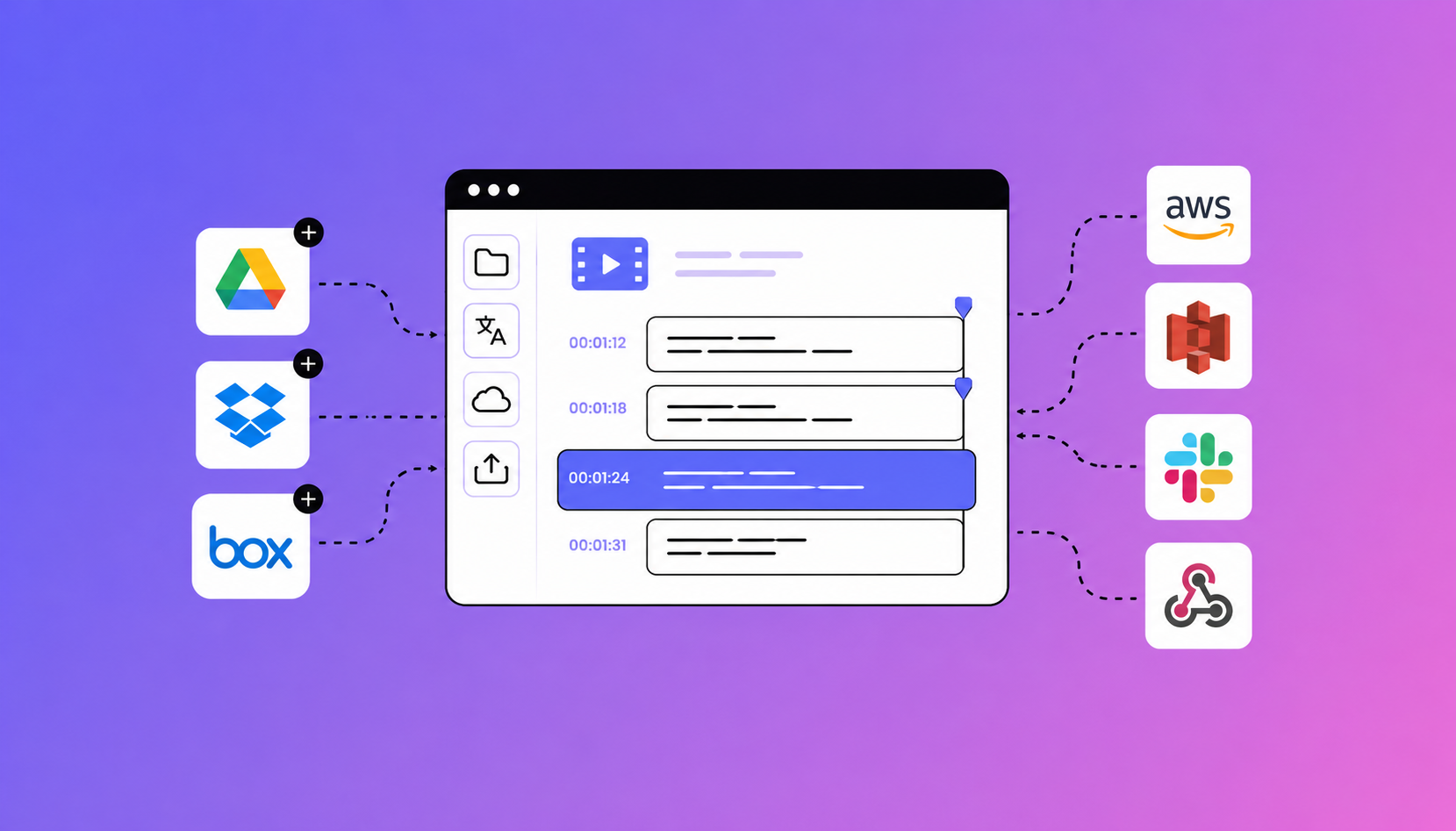

Ask most people who captions are for, and the mental model is decades old: a modest audience with hearing loss, served by a feature the rest of us scroll past. It's a picture that makes captioning feel like a courtesy — worthy, marginal, optional. The data describes a different world. Half of viewers now watch with subtitles most of the time. Among Gen Z it's around 70%. Netflix's own usage figures show 40% of its global users keeping subtitles permanently on. And the finding that reframes everything: in Verizon Media and Publicis Media's research, about 80% of the people watching with captions are not deaf or hard of hearing at all. Captions stopped being a niche feature. They became the default reading layer of video — and content published without them is invisible or unusable to a startling share of its potential audience. Here's who's actually behind those numbers, and what it means for anyone who publishes.
The six audiences reading your captions
1. Deaf and hard-of-hearing viewers — the audience captions exist for
Start where captions started, because scale here is routinely underestimated: the WHO counts around 1.5 billion people living with some degree of hearing loss, roughly 430 million of them with disabling hearing loss — numbers rising as populations age. For this audience, captions aren't a preference but the access layer itself, which is why they're what accessibility law specifically requires — and why quality matters, not mere presence: 3Play Media's research finds captions the single most-used accessibility feature online, and a caption track that's unreadable in practice fails the very people it nominally serves.
Everything below is in addition to this audience — never instead of it.
2. The sound-off majority
The environments video actually plays in: the commute, the open-plan office, the gym, next to a sleeping partner, and above all the feed — where autoplay is muted by design. Studies of mobile viewing put sound-off as the default state for the overwhelming majority of mobile video starts. In those moments your captions aren't an enhancement; they're the entire soundtrack. No captions, no message — just motion.
3. Non-native speakers
For anyone watching in their second or third language, captions close the gap between "mostly followed" and "understood" — reading reinforces listening in real time. Every international viewer, student, employee or customer in your audience watches through this lens, and the global boom in foreign-language content has made subtitle-reading a completely normalised habit along the way.
4. The subtitle generation
The most striking shift is generational. Preply's surveys put around 70% of Gen Z watching with subtitles most of the time (Millennials: just over half); Stagetext's UK polling found some 80% of 18–24s using them some or all of the time — in the age group with the fewest hearing problems. Their stated reasons are practical, not medical: muddled audio mixing (cited by 72%) and hard-to-parse accents (61%). For an audience raised on captioned feeds, text-on-video is simply what video looks like — and its absence reads as unfinished.
5. Focus, comprehension and retention
Reading while listening is a comprehension aid, full stop: it anchors attention in noisy environments, supports viewers with ADHD and other processing differences, helps everyone through dense or fast material, and gives the multi-screening majority a thread to follow back. Many people who "just prefer" captions are, functionally, using them as a focus tool — they've simply never needed to name it.
6. Machines
The audience nobody visualises: search engines and AI assistants can't hear your video, but they can read a caption file and index a transcript. Captions are how the substance of your video becomes findable, quotable text — the visibility layer an entire content workflow can be built on.
The business translation
Follow those audiences to the metrics and the pattern is unambiguous — this is the section to show whoever approves budgets:
- Completion: Verizon Media and Publicis Media found viewers dramatically more likely to finish a video when captions are available — the figure cited is 80%.
- Attention: Meta's internal testing measured captioned video ads holding viewers noticeably longer — around 12% more view time on average.
- Reach: every sound-off context, every non-native speaker, every subtitle-default younger viewer is audience your uncaptioned video quietly sheds.
- Findability: captioned and transcribed content is indexable content; silent video is invisible video.
Notice what's absent from that list: charity. The case for captions closes on reach and performance alone — accessibility is where it starts, not the only place it pays.
Compliance is the floor. Reach is the reason.
For many organisations, captions are now a legal requirement anyway — the European Accessibility Act and its siblings saw to that. But the law describes the minimum, and the audience describes the opportunity: the same caption track that satisfies a regulator serves the commuter, the second-language viewer, the subtitle-native twenty-year-old, and the search crawler — simultaneously, at no extra cost.
Publishing without captions in 2026 isn't neutral. It's choosing a smaller audience.
And the practical objection — it takes time — retired some while ago. Inwista's free plan lets you run the whole workflow on your own material — upload, transcribe, structure, edit and export. Current limits and plan details are on the pricing page.
Caption the next thing you publish →
Frequently asked questions
What share of viewers actually use captions?
Around half of viewers report watching with subtitles most of the time, per Preply's US surveys — rising to roughly 70% among Gen Z. Netflix's own figures show 40% of global users keeping subtitles on constantly, and 80% switching them on at least monthly.
Aren't captions mainly for deaf viewers?
They exist for deaf and hard-of-hearing viewers — a global audience the WHO measures in the hundreds of millions — and that purpose is the non-negotiable core. But in usage terms they've long outgrown it: about 80% of the people watching with captions have no hearing loss.
Do captions measurably improve engagement?
Yes — the recurring findings are higher completion rates when captions are available (the widely cited figure is 80% more likely to finish) and longer view time on captioned ads in Meta's internal tests.
Why does Gen Z watch everything with subtitles? By their own account: muddled modern audio mixes and hard-to-follow accents top the list, alongside multitasking and habit. For viewers raised on captioned social feeds, subtitles are simply part of what video is.
My audience is domestic and hearing — is this still worth it?
The sound-off commuter, the multitasker, the subtitle-default younger viewer and the search engine are all in your domestic, hearing audience. The 80% figure is the point: most caption value lands on people who hear perfectly well.
Where do I start?
With the next thing you publish — one upload, one Enhance pass, one read-through. The full chain is in our workflow guide, and the free plan covers a realistic monthly output.
Statistics referenced are from published research by Preply, Stagetext, Verizon Media & Publicis Media, Netflix, Meta, 3Play Media, AP-NORC and the World Health Organization; figures are rounded and paraphrased. Last updated: July 2026